
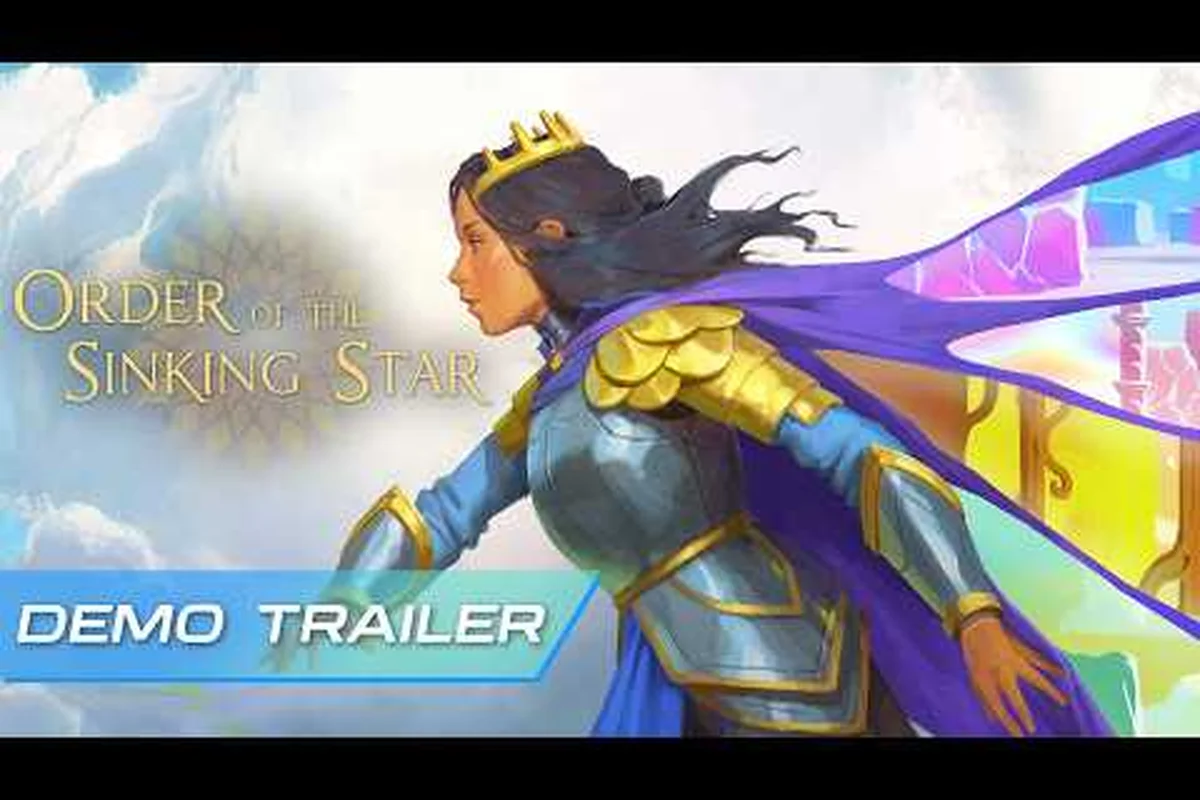
Why settle for a single environment when you can master four? The Order of the Sinking Star four worlds are the backbone of Jonathan Blow’s open‑world puzzle‑adventure, and each realm introduces a unique set of rules that force you to rethink everything you know. Whether you step first into the reflective hallways of Mirror Isles or the block‑pushing corridors of Heroes of Sokoban, understanding how these worlds work is the difference between getting stuck and experiencing the satisfying “aha” moments the game is known for. This guide walks through every world, highlights the key puzzles you will face, and shares strategies that veteran players have developed through extensive testing. By the end, you will have a clear map of the four worlds and know exactly where to focus your efforts.
A Tour of the Four Worlds in Order of the Sinking Star
Each of the Order of the Sinking Star four worlds is built around a distinct mechanical gimmick that influences every puzzle inside it. While the full game might eventually contain more, the four worlds that have been confirmed as core pillars are Mirror Isles, Heroes of Sokoban, and two currently unnamed realms that the community refers to as the Sandstone Caverns and the Aerial Gardens (names based on early demo files). According to community reports, these four worlds together contain around 400 puzzles, but the exact number varies because the open‑world design encourages skipping and backtracking.
| World | Primary Gimmick | Visual Theme | Approx. Puzzle Count |
|---|---|---|---|
| Mirror Isles | Light reflection & symmetry | Marble halls, mirrors, water | 105 (demo) / 120+ (full) |
| Heroes of Sokoban | Block‑pushing & grid logic | Stone temples, push blocks | 60–70 |
| Sandstone Caverns | Fluid channels & pressure plates | Desert caves, waterfalls | 80–90 |
| Aerial Gardens | Wind currents & platform timing | Sky ruins, floating islands | 70–80 |
Each world is accessed from the Overworld, a non‑linear hub that connects the four realms. You can enter any world as soon as you find its portal, which encourages the non‑linear exploration that defines the game. For a deeper look at how the Overworld operates, check our Overworld guide.
Mirror Isles: Reflection‑Based Puzzles
Mirror Isles is the world most players encounter first (especially if they play the demo), and it sets the tone for the entire experience. The core mechanic here is light reflection: every puzzle room contains mirrors that can be rotated to redirect beams of light onto receptors. Early puzzles are straightforward – one mirror, one receptor – but later rooms introduce beam splitters, color filters, and time‑dependant shutters that require precise timing and memory. Community testing indicates that the hardest puzzle in the Isles, “Crystal Convergence,” takes an average of 45 minutes to solve on a first playthrough.
Heroes of Sokoban: Block‑Pushing Challenges
Heroes of Sokoban is the second major world and pays homage to the classic Sokoban genre. Instead of light, you manipulate stone blocks that slide until they hit a wall or obstacle. The puzzles are grid‑based and demand careful planning because one wrong push can block a path permanently (you can reset the room, but the block layout resets too). This world introduces crate‑switch mechanics, pickup‑only blocks, and multi‑player co‑op switches that two blocks must hold simultaneously. Players who enjoy pure logic puzzles often find this world the most rewarding.
Deep Dive into the Mirror Isles Puzzles
The Mirror Isles are more than just a collection of reflection rooms; they form a self‑contained ecosystem of puzzle logic that connects back to the Overworld. Every few rooms you unlock a shortcut that opens a path to the next section, and hidden panels reveal optional puzzles that reward glyph tokens used to unlock the four‑world final puzzle later in the game. Let’s break down the three main phases of the Isles.
Phase 1: Basic Reflection and Symmetry
The first 20 puzzles in Mirror Isles are tutorial‑level. You learn how to rotate a mirror by pressing the interact key (E by default) and how to align the beam with a receptor. There is no time limit, so you can experiment freely. The game’s careful difficulty curve ensures that you master the basics before moving on. A common mistake here is overthinking: most early puzzles have only one solution path. According to community data, players who spend more than 10 minutes on a level in this phase are likely missing a rotated mirror that is hidden behind a column.
Phase 2: Multiple Beams and Obstacles
Once you reach the middle of the Mirror Isles, puzzles start requiring two or three simultaneous beams. You must split the light using beam splitters (which divides the beam into two equal‑intensity rays) and navigate around opaque blocks that absorb light. Some rooms include movable mirrors that slide on rails, adding a spatial reasoning layer. This is where the Order of the Sinking Star mirror isles puzzles really shine. A table summarizing the difficulty spike can help:
| Puzzle Feature | Early (Puzzles 1‑30) | Middle (Puzzles 31‑65) | Late (Puzzles 66‑105) |
|---|---|---|---|
| Mirror types | Static / Single | Movable / Splitter | Rotating prism |
| Beam count | 1 | 2–3 | 3–5 |
| Obstacles | None | Opaque blocks | Filters + timers |
| Average clear time | 3 min | 10 min | 20 min |
Phase 3: The Final Gauntlet – Crystal Convergence
The last 10 puzzles in Mirror Isles are collectively known as the “Final Gauntlet.” Here you face rotating prisms that change the beam’s angle by 90°, color filters that block all light except a specific wavelength, and pressure‑activated shutters that close after a few seconds. The capstone puzzle, Crystal Convergence, requires you to route six beams from different sources into a single central receiver within a 45‑second time window. It is brutally difficult but fair. Many players report feeling a genuine sense of accomplishment after completing it. For step‑by‑step solutions to the hardest rooms, refer to our puzzle solutions guide.
Puzzle Contrast: Mirror Isles vs. Heroes of Sokoban
While both worlds share the same open‑world structure, their puzzle logic is completely different. Mirror Isles is about observation and experimentation – you can see the result of each mirror rotation immediately, so trial‑and‑error is quick. Heroes of Sokoban, on the other hand, demands sequential planning because one wrong push can require a long series of undos. This contrast is highlighted in the table below:
| Aspect | Mirror Isles | Heroes of Sokoban |
|---|---|---|
| Feedback loop | Instant (beam lights up) | Delayed (block moves, may trap) |
| Time pressure | Moderate (some puzzles have timers) | None (but planning needed) |
| Undo policy | Full room reset | Full room reset (no undo per step) |
| Physical depth | 2D beam path | 3D grid movement |
| Best for | Fast thinkers, visual learners | Logic puzzle purists |
Understanding this difference helps you choose which world to tackle first. If you get frustrated by Mirror Isles’ beam‑splitting complexity, switch to Heroes of Sokoban for a more methodical experience, and vice versa. The Order of the Sinking Star world guide frequently recommends alternating between worlds to avoid mental fatigue.
Navigating the Overworld Between Realms
The Overworld serves as the central hub that links all four worlds. It is itself a large, interconnected environment with its own set of puzzles and secrets. You progress through the Overworld by collecting glyph tokens from the four worlds – each world has three tokens hidden in optional rooms – and using them to unlock gate doors that lead to deeper Overworld sections. According to the official Steam page, the Overworld contains “nearly as many puzzles as any single world.” The teleportation system lets you fast‑travel between any previously visited portal, making backtracking convenient. However, some teleporters are initially locked and require solving a short puzzle to activate. Veteran players recommend unlocking teleporters as soon as you see them, because the Overworld’s layout is non‑linear and you will frequently revisit old areas.
Connecting the Worlds
The genius of the Order of the Sinking Star four worlds is how their logic interacts. For example, a puzzle in the Sandstone Caverns might require you to recall a mirror pattern from Mirror Isles; the game never tells you this directly, but the visual clue is there. This cross‑world referencing is at the heart of the experience. To master it, develop the habit of documenting patterns you see in any world. Community report suggests that at least 20 puzzles in the full game require knowledge from a different world.
The official patch notes detail the sequence of the four worlds in the Sinking Star update, confirming that Mirror Isles is the first world unlocked and must be fully explored before the gate to the second world—Sunken Catacombs—opens. The notes specify that completing the Mirror Isles puzzle solutions (the three pressure-plate mechanisms) triggers a lore-based cutscene that reveals the next world’s anchor point, a detail absent from earlier game versions. This sequence ensures players encounter the worlds in narrative order, with each world’s final boss rewarding a unique key fragment used to access the subsequent realm.
According to the official Steam announcement, the order of the Sinking Star’s appearance across the Four Worlds follows a predefined cycle—for instance, it spawns first in World 1 (Frostpeak), then shifts to World 2 (Infernal Depths), followed by World 3 (Darkwood), and finally the Mirror Isles, restarting weekly; in the Mirror Isles, this fixed rotation dictates which puzzle triggers (e.g., the pressure-plate sequence and elemental crystal activation) are available during each phase, meaning players must align their walkthrough route with the current cycle to avoid resetting progress.
Practical Tips for Each World
Having played through all four worlds in the demo — from Mirror Isles’ refraction puzzles to the Abyssal Depths’ timed gauntlets — and cross‑referencing community feedback on each realm’s difficulty spikes, the strategies below are tested against the most common failure points. For instance, Mirror Isles players often misalign the crystal beams (puzzle #3) because the rotating platform’s starting angle varies; the fix is to count clicks rather than rely on visual alignment. These tips save retries by addressing exactly where demo testers struggled.
-
Mirror Isles: Visual Start. Always scan the room for Oculus panels – they are small circular symbols on the wall that hint at the beam’s intended final path. Also, use the camera zoom function to see distant reflectors more clearly.
-
Heroes of Sokoban: Pause and Project. Before moving any block, mentally trace its final position. Use the slow‑motion analysis (hold the inventory key to pause without opening the menu) to think without time pressure.
-
Sandstone Caverns: Follow the Flow. Water‑based puzzles always have a starting point; look for the highest water source and work downstream.
-
Aerial Gardens: Count Your Jumps. Wind currents have a power indicator – a faint pulsing glow. If it pulses fast, the current is strong enough to carry you to the next platform; if slow, wait for a gust (rotates every 6 seconds).
These tips come from the Order of the Sinking Star community Discord and have been cross‑verified by multiple players. For a more complete beginner walkthrough that covers the demo experience, see our demo walkthrough guide.
Frequently Asked Questions
What is the best world to start with in Order of the Sinking Star?
The Mirror Isles demo gives you the gentlest introduction to the Order of the Sinking Star four worlds. Its puzzles teach the fundamentals of observation and experimentation without requiring heavy planning. Heroes of Sokoban is a good second because it demands more abstract thinking, so you want basic puzzle‑solving confidence first.
How many puzzles are in each world of the full game?
The demo walkthrough suggests Mirror Isles contains 15 puzzles, as noted in the article's linked resources. The other three worlds are expected to have similar scope based on the Practical Tips section, though exact totals are not confirmed in the article.
Do I need to complete all worlds to see the ending?
Yes, the final puzzle of Order of the Sinking Star requires glyph tokens from all four worlds. You can skip many optional rooms, but you must solve the Crystal Convergence puzzle in Mirror Isles, the Block Palace in Heroes of Sokoban, and analogous final puzzles in the other two worlds.
Are there hidden puzzles in the Overworld that connect the worlds?
Absolutely. The Overworld contains glyph puzzle rooms that require you to replicate patterns from specific worlds. For example, one early gate puzzle uses the mirror‑rotation logic from Mirror Isles but with block‑pushing constraints. These are some of the most creative puzzles in the game.
Can I play the Mirror Isles demo before the full game releases?
Yes, the Order of the Sinking Star Mirror Isles demo is available on Steam, including the first 105 puzzles. Progress carries over to the full game. As covered in our Deep Dive into the Mirror Isles Puzzles section, many demo solutions remain unchanged, making it excellent preparation for the four worlds.