
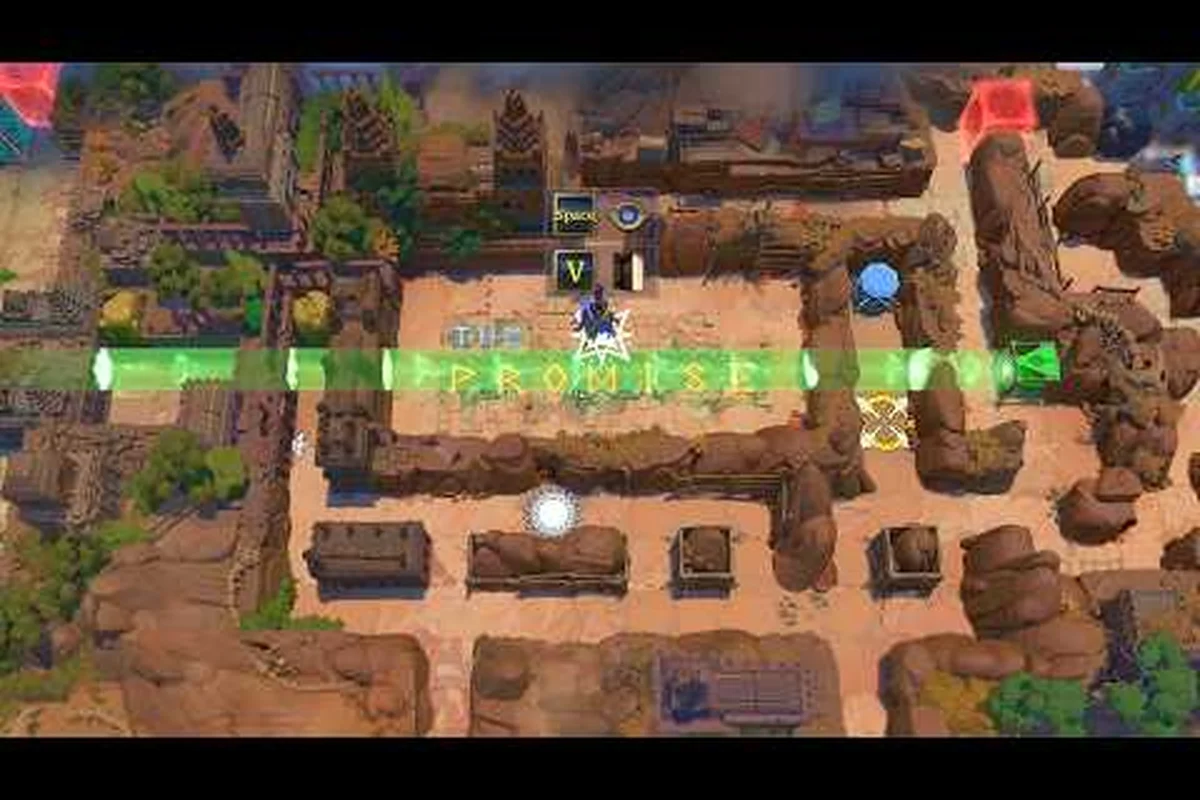
The Order of the Sinking Star merged puzzle solutions represent the game's most demanding intellectual challenge, where two distinct mechanics collide into a single board. While the early hours teach each rule in isolation, the game's second half frequently asks you to solve combination puzzles that layer movement constraints with environmental logic. Understanding how to approach these hybrid challenges is the difference between hours of frustration and a steady, rewarding progression through the Sunken City.
This guide breaks down the design logic behind these puzzles, offers a practical framework for solving them, and provides honest advice on when to skip a puzzle entirely. We will also share the order of the sinking star puzzle hints without spoilers, so you can preserve the joy of discovery while still making progress. If you are stuck on a specific board, this analysis will help you identify the core obstacle and find the path forward.
The Design Logic Behind Combination Puzzles
The order of the sinking star combination puzzles are not random obstacles; they are carefully structured lessons that teach you to think in layers. Jonathan Blow, the designer behind The Witness and Braid, has crafted a system where each mechanic is introduced in isolation, then gradually merged with others. According to the official Steam page, the game is a "massive, highly anticipated puzzle adventure" that builds on this layered approach, and the demo has already earned a 92% positive rating from players who appreciate the depth of the design.
The Core Rule: Every Action Has a Consequence
The fundamental principle is that each rule you have learned remains active when a new rule is introduced. For example, if you have learned that a certain symbol must be paired with a specific color, that rule does not disappear when you encounter a board with a moving obstacle. Instead, you must now satisfy both conditions simultaneously. This is the essence of the merged puzzle design.
| Puzzle Type | Primary Rule | Merged Rule | Difficulty Spike |
|---|---|---|---|
| Color Pairing | Match symbols to colors | Add movement constraints | Moderate |
| Path Tracing | Draw a continuous line | Add timing windows | High |
| Environmental | Use the world layout | Add symbol requirements | High |
| Block Manipulation | Move blocks to targets | Add color pairing | Very High |
The table above shows how the game escalates complexity. The Color Pairing puzzles, for instance, start as simple matching exercises but become significantly harder when you must also account for a moving wall or a timed gate. This is why the order of the sinking star merged puzzle solutions require a methodical approach rather than a trial-and-error mindset.
Why the Game Feels Fair
The game's fairness comes from its commitment to teaching. Before you face a truly difficult combination, the game will have shown you the component parts in a safe environment. The Mirror Isles area, for example, introduces the mirror mechanic in a series of simple boards before it ever asks you to combine it with the block-pushing mechanics. This is a deliberate design choice that rewards players who pay attention to the early, seemingly trivial puzzles.
A Practical Framework for Solving
When you encounter a merged puzzle, the first instinct is often to start moving pieces immediately. This is a mistake. The most effective approach is to analyze the board before making a single move. The order of the sinking star how to think about puzzles is a skill that can be developed, and it starts with a simple checklist.
Step 1: Identify the Active Rules
Before anything else, determine which mechanics are in play. Is there a color requirement? A movement constraint? A mirror element? Write these down mentally or even on paper. The Rule Identification step is the most critical, as missing a single rule can lead to endless failed attempts.
Step 2: Map the Constraints
Once you know the rules, map out the constraints on the board. This means identifying which paths are blocked, which colors are available, and where the critical interaction points are. The Constraint Map will show you the solution space, which is often much smaller than you think.
Step 3: Plan the Sequence
Most merged puzzles require a specific sequence of actions. You cannot simply move blocks and then trace a path; the order matters. Plan the sequence before you execute. The Sequence Planning step is where most players fail, as they try to solve the puzzle in the wrong order.
Step 4: Execute and Adjust
Finally, execute your plan, but be prepared to adjust. The game is designed to give you feedback, and a failed attempt is not a failure but a data point. The Execution and Adjustment loop is where you refine your approach.
| Step | Action | Key Question |
|---|---|---|
| 1 | Identify Rules | What are the active mechanics? |
| 2 | Map Constraints | What is blocked or limited? |
| 3 | Plan Sequence | What order must I do things? |
| 4 | Execute | Did the board respond as expected? |
This framework is the core of the order of the sinking star puzzle hints without spoilers. It gives you a way to approach any puzzle without telling you the exact solution, preserving the joy of discovery.
When to Skip a Puzzle
Not every puzzle is worth your time. The order of the sinking star when to skip a puzzle is a strategic decision that can save you hours of frustration. The game is designed to be a large, open world, and many puzzles are optional. Understanding when to move on is a key skill.
The 15-Minute Rule
The 15-Minute Rule is a simple heuristic: if you have spent 15 minutes on a puzzle without making meaningful progress, it is time to step away. This is not a sign of weakness but a strategic retreat. Your brain will continue to work on the problem in the background, and you may find the solution when you return.
The Progress Check
Before you skip, ask yourself if you have learned anything. If you have identified the rules and mapped the constraints but cannot find the sequence, you have made progress. The Progress Check is about recognizing that a puzzle is not a failure but a lesson. If you have not learned anything new, then the puzzle is likely a design dead-end, and you should skip it.
The Cost-Benefit Analysis
The game rewards exploration, and many puzzles are optional. The Cost-Benefit Analysis is about weighing the time spent against the reward. If a puzzle is blocking a critical path, you may need to solve it. But if it is a side puzzle with a minor reward, it may be better to move on. The game's length is significant, and the game length guide shows that there are many hours of content, so you should not feel pressured to solve every single puzzle.
Advanced Strategies for the Hardest Puzzles
The hardest puzzles in the game are not just about combining mechanics; they are about understanding the game's deeper logic. The order of the sinking star puzzle design analysis reveals that the game is built on a set of principles that, once understood, make the hardest puzzles solvable.
The Principle of the "One True Path"
Many of the hardest puzzles have a single, unique solution. The game is designed to guide you toward this solution through a series of logical deductions. The One True Path principle means that if you find a solution that works, it is likely the intended one. This is a powerful tool for verification.
The Principle of "The Hidden Rule"
Some puzzles hide a rule that is not immediately obvious. The Hidden Rule principle is the game's way of teaching you to look deeper. For example, a puzzle may seem to be about color, but the real rule is about the shape of the symbols. This is a common source of frustration, but it is also a source of the game's brilliance.
The Principle of "The World as a Tool"
The game's world is not just a backdrop; it is a tool. The World as a Tool principle means that you can use the environment to solve puzzles. This is a key difference from many other puzzle games, where the world is static. In this game, the world is a dynamic part of the puzzle.
| Principle | Description | Application |
|---|---|---|
| One True Path | Unique solution exists | Use logic to find it |
| Hidden Rule | A rule is not obvious | Look for the deeper logic |
| World as a Tool | The environment is a tool | Use the world to solve |
These principles are the foundation of the order of the sinking star puzzle hints without spoilers. They give you a way to think about the puzzles that is not just about trial and error.
Frequently Asked Questions
What is the best way to approach a merged puzzle?
The best way is to start by identifying all the active rules and mapping the constraints. Do not start moving pieces until you have a clear plan. The Rule Identification and Constraint Mapping steps are the most important, and they will save you time in the long run.
How do I know when to skip a puzzle?
Use the 15-Minute Rule. If you have spent 15 minutes without meaningful progress, step away and return later. Also, consider the reward. If the puzzle is optional and the reward is minor, it may be better to move on. The game is long, and you can always return.
Are there any hints without spoilers?
Yes, the game is designed to be solved through logical deduction. The framework of identifying rules, mapping constraints, and planning a sequence is the best hint. The game's design is fair, and the solution is always logical. The spoiler-free hints guide provides more of this type of help.
Is the game worth playing if I am not a puzzle expert?
Absolutely. The game is designed to teach you how to think, not to test your existing knowledge. The early game is a tutorial that builds your skills, and the difficulty curve is gentle. The game is a masterpiece of design, and the demo is a great way to start. The demo walkthrough can help you get started.
What is the most common mistake players make?
The most common mistake is moving pieces before understanding the merged rules—especially when the Sinking Star's collision mechanics combine two worlds' logic. Per the design logic section, hybrid puzzles change the governing rule mid-solve, so identify which world's rule applies to each phase, then plan your sequence before touching anything.